

Research’s Real-life Impact
Cancer survivors share their stories on Capitol Hill to Rally for Medical Research
When Richard Schlueter was getting treatment at the National Institutes of Health (NIH) for stage 4 head and neck squamous cell carcinoma, his wife, Michelle, was blown away by the level of care.
“The hospital is unbelievable. It is a magical, magical place,” she said. “They are doing the most wonderful things there.”
They quickly understood why patients affectionately called the NIH by another name: the National Institutes of Hope.
Richard beamed about the level of dedication of every scientist he met. “They’re so mission-oriented and driven. They could be making much more money in the private sector, but they’re so committed to solving the issues of cancer,” he explained.
Michelle was grateful for their attention to detail, saying, “Any other hospital, I probably would’ve stayed with him each night, but at NIH they have round the clock care for him.”
And they both couldn’t stop listing examples of the genuine empathy the people displayed there. When Richard struggled to eat, one of the fellows offered to get him the salt and vinegar chips he craved. Another helped set up a TV in his room. And yet another spent the night watching a Braves game with him (he’s from Georgia).
But all of this almost never happened.
The treatment Richard was hoping would be a cure for his metastatic disease was delayed by five weeks because of the actions of the Department of Government Efficiency (DOGE).
“These cuts were being publicly justified as eliminating waste, fraud, and abuse from federal agencies,” Richard said. “The staff who make NIH clinical trials and research possible are not waste, fraud, and abuse. I was devastated and I was furious.”
During the delay, Richard’s cancer progressed, his bones weakened—some even broke—and his blood counts dropped to dangerously low levels.
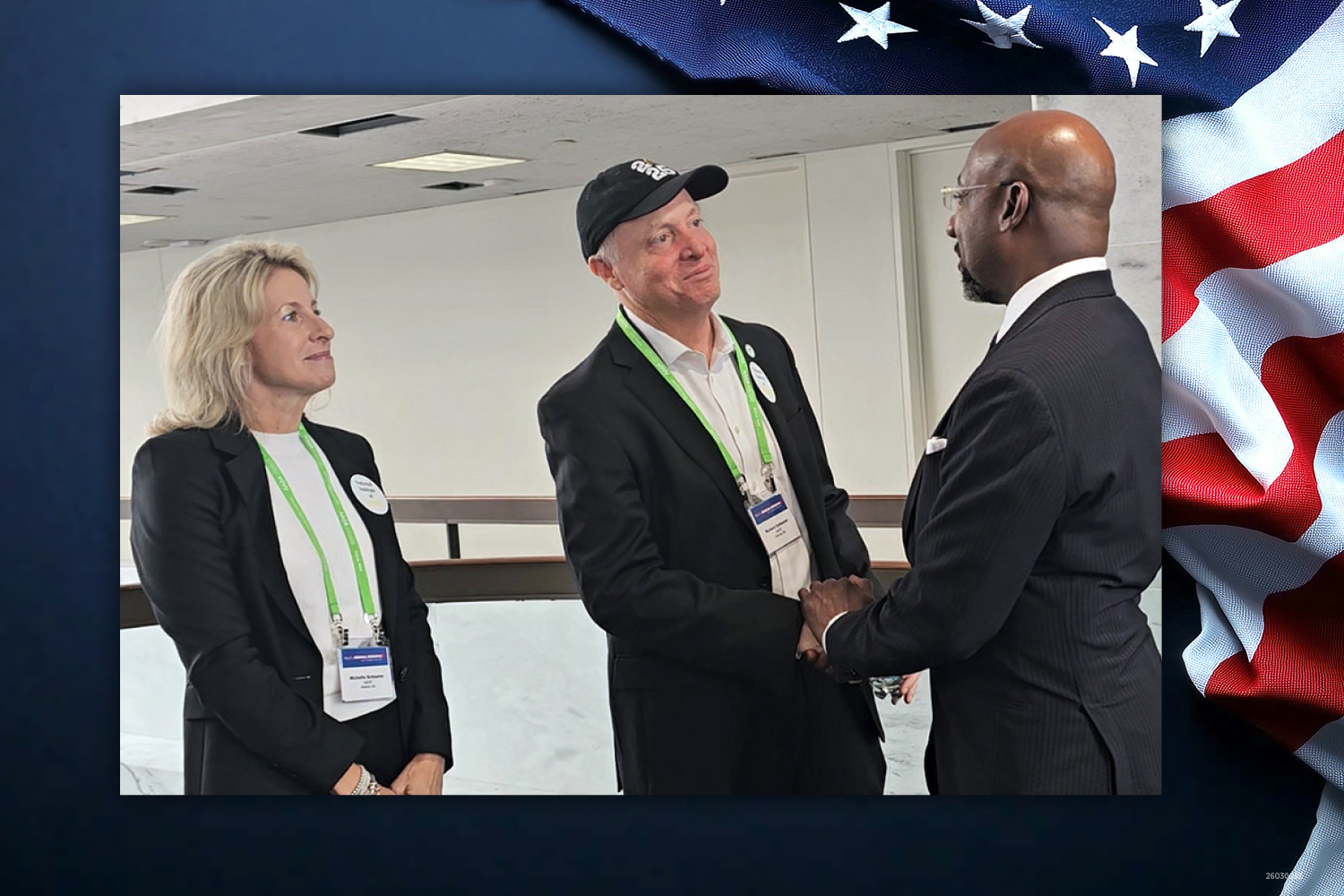
 On September 18, 2025, Richard and Michelle shared their story on Capitol Hill as a part of the Rally for Medical Research. With the American Association for Cancer Research® (AACR) as a founding organizer and lead sponsor, the Rally for Medical Research has had the same mission for 13 years: to advocate for robust funding for the NIH.
During each meeting with congressional representatives or their staff, Richard shared his story, which was also published in the 15th AACR Cancer Progress Report on September 17.
The day he was diagnosed in February 2024, his oncologist was blunt: “This disease will end your life.” The only available options were intended to provide palliative care—to ease his symptoms and possibly prolong his life for a few months. So, Richard sought out clinical trials being conducted at some of the top institutions in the country.
Eventually, he ended up at the NIH to see Steven A. Rosenberg, MD, PhD, FAACR, who is chief of surgery at the National Cancer Institute (NCI) and a pioneer of immunotherapy. Rosenberg’s current research involves treating cancer by extracting a patient’s own tumor-infiltrating lymphocytes (TILs), which are then expanded outside of the body and delivered back into the patient where they can trigger the immune system to fight cancer.
In January 2025, when Richard visited the NIH to have his TILs harvested, Rosenberg told him, “I have big plans for you.”
“For the first time in months, I felt a glimmer of hope,” Richard said.
In March 2025, the TILs were confirmed as viable for treatment. When his disease progressed, he was told it would take three weeks to prepare the TILs for reinfusion into his body.
But that wait became eight to 10 weeks. As part of DOGE’s purge of probationary employees in early 2025, two of the technicians in Rosenberg’s lab, who would help prepare the TILs for Richard, were let go.
While he waited for treatment, Richard was only allowed to undergo radiation therapy to treat the cancer that spread to his bones. However, the radiation lowered his blood counts to the point where he no longer qualified for the TIL trial. Fortunately, his oncologist worked with the NIH to secure a single-use access from the U.S. Food and Drug Administration (FDA), and he finally received his TIL infusion on August 1, 2025.
The results from the first infusion were mixed. A scan after four weeks showed that while some of his tumors shrunk, others grew. Richard was told that since this was the first time a TIL therapy was used in his cancer type, it is possible a response may just take more time. However, he has since pursued other clinical trial options.
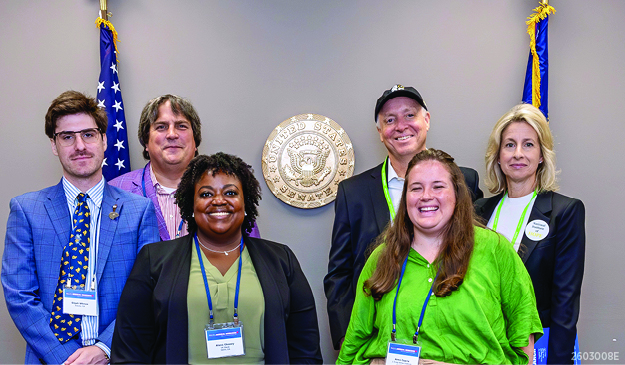
Knowing Richard’s story needed to be told, he and his wife joined more than 430 people from 40 states who participated in over 200 meetings at this year’s Rally—making it one of the largest ever.
Appreciation was a core component of Rally participants’ messages, thanks to the long-standing bipartisan support of medical research that the Senate and the House have continued to show. The cancer survivors in attendance served as reminders of the real-life impact of that research.
Richard hopes that researchers are close to discovering the key to treating his cancer, but also that research continues to advance. “If you don’t have hope, it is a really dark place to be,” Richard said. “But I have it, and I want to keep it.”
By The Numbers: Overwhelming Support for Medical Research
On September 17, 2025, the American Association for Cancer Research® (AACR) released a national survey measuring voters’ attitudes about federal funding for medical research. The national survey, by Hart Research and Public Opinion Strategies on behalf of the AACR, was conducted online between August 26-30, 2025, and included 1,001 registered voters.
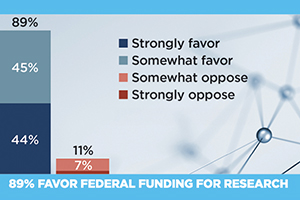
• 89% favor the federal government using taxpayer dollars to fund medical research to fight diseases and improve public health;
• 83% favor increasing funding for cancer research, including 75% of Republicans, 75% of MAGA supporters, 93% of Democrats, and 75% of independents; and
• 77% feel more favorable toward their congressional representative if he or she voted to increase federal funding for cancer research over the next decade.
“The takeaway is clear: Americans are united in the fight against cancer and all diseases,” said Margaret Foti, PhD, MD (hc), chief executive officer of the AACR. “Encouragingly, this sentiment permeates through our elected officials in Congress.”
Related Posts